
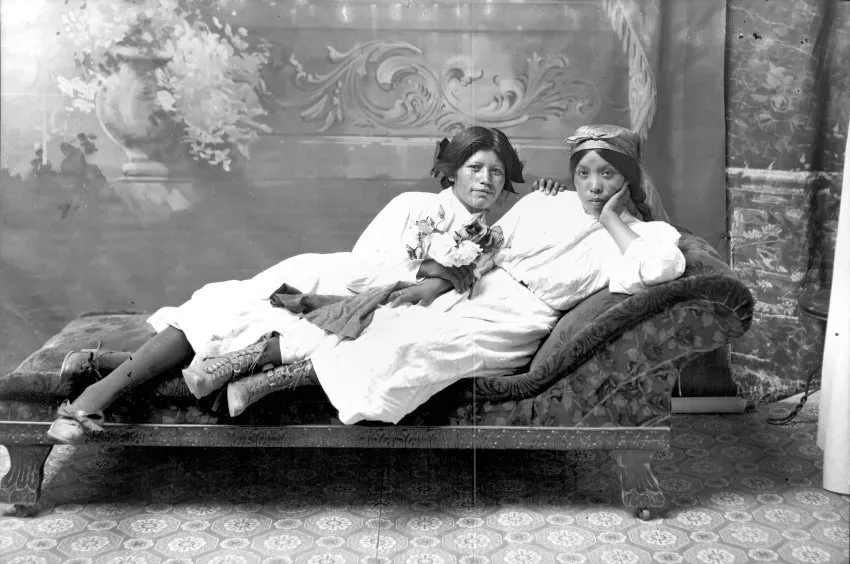
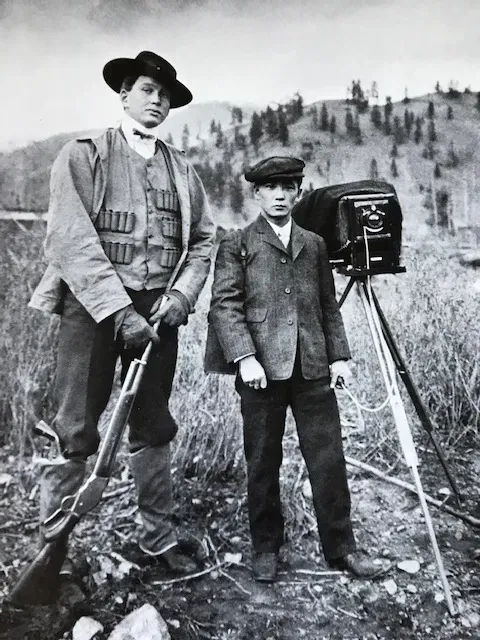
OUR Mr. Matsura tells the remarkable story of a talented and charismatic young Japanese photographer who emigrates to the U.S. in the early 20th century, and ends up dedicating his short life to documenting the Native peoples of eastern Washington state.
In the hands of a lesser filmmaker it could have been just a detective story about how and why Sakae "Frank" Matsura left Japan for the American hinterland.
But thanks to director Beth Harrington, the documentary film is an engaging story of two cultures in the middle of seismic change.
“His relationship with the tribes is very genuine. In his photography, we always feel like he’s telling us the most important thing about his subjects,” Harrington says.
Our Mr. Matsura screens this Friday, March 6, 5 pm at the Otis S. Johnson Cultural Arts Center downtown as part of the Hindsight Film Festival.
Matsura grows up learning the then-new art of photography during the Meiji Restoration, a tumultuous time in Japanese history.
It marks the sudden end of the long feudal era, when within a single generation Japan is mostly Christianized and exposed to the outside world after centuries of isolation.
Significantly, it is the first time in over 200 years that Japanese citizens are allowed to leave Japan. For whatever reason, 20-year-old Matsura boards a passenger ship in Yokohama Harbor in 1901 – telling no friends or family of his plans – and heads to Seattle, never to return to his native land.
The Colville Confederated Tribes of eastern Washington are then going through tumult of their own. Only recently forcibly resettled on a massive reservation, even that relative peace is denied them.
Under pressure from white settlers and railroad expansion, the Colville Tribes are forced to relinquish large parts of their reservation, in direct violation of treaties.
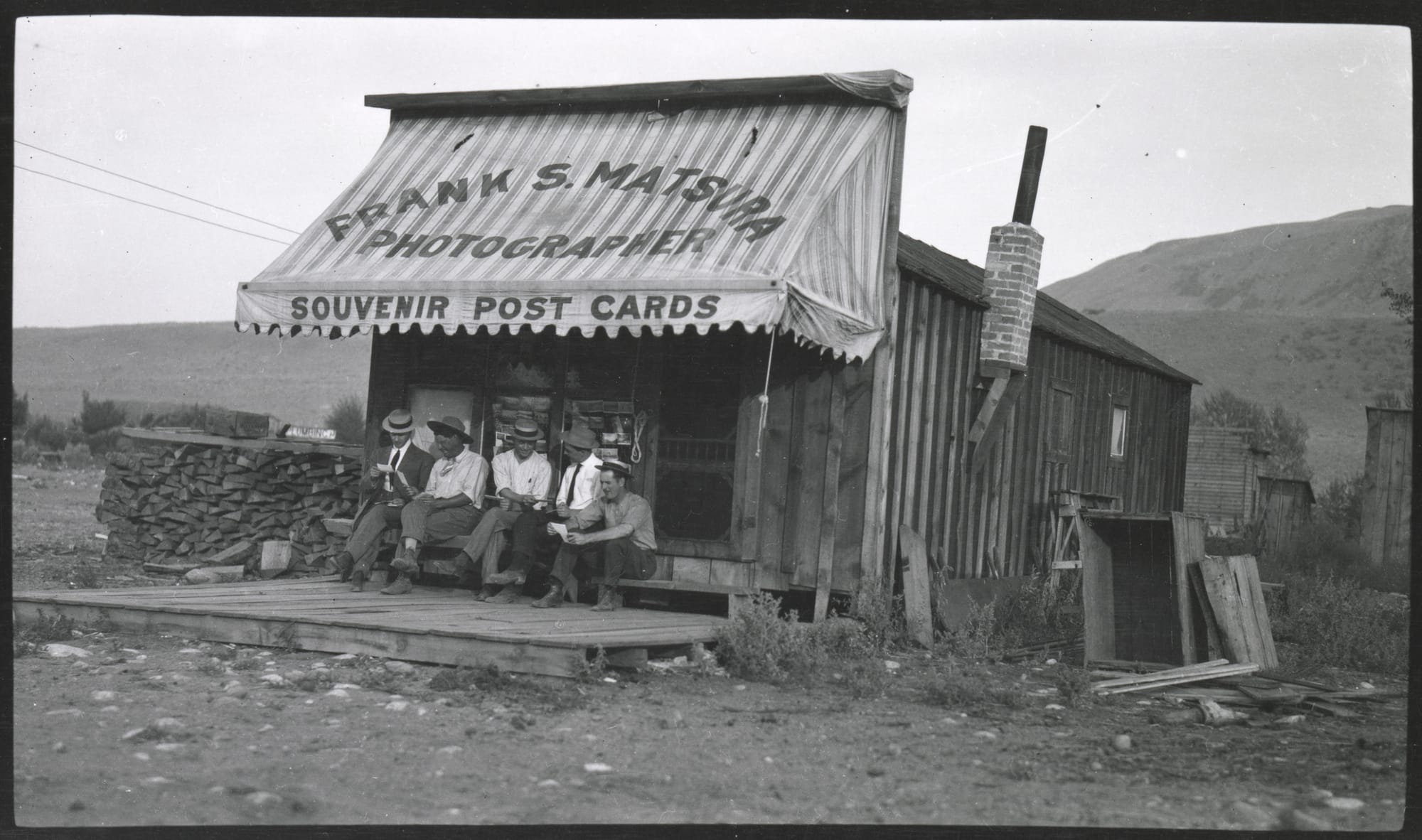
After a few odd jobs around Alaska and Washington state, and for reasons still unclear, Matsura settles in this Okanogan County region of eastern Washington and begins making friends with these Native people of the local area.
“Frank learned that those people of the Columbia River Plateau had also been buffeted around, and were trying to live their lives on this vast, soon-to-be-carved-up reservation,” says Harrington.
“This is the heart of the story – Frank is living in a place and time where the expansion of farming and the railroad is the subtext of everything.”
And just as importantly for our purposes, he documents them with photography, in Matsura’s singularly engaging, visually gorgeous, and often quite humorous style.
The Indigenous people Frank photographs are clearly relaxed and welcoming subjects, often directly encouraged by Frank himself to be funny.
This style comes directly from a type of Japanese photography Frank would have been familiar with, in which people dressed up in costumes and did silent skits for photographers.
“This is the early Meiji style of Japanese photography, and I believe this is the spark of his work with the tribes,” Harrington says. “He is so different, so open. And he is so charismatic, he’s able to direct people. He manages to get the little kids relaxed and laughing. And also Frank is just such a clever photographer.”
While Our Mr. Matsura doesn’t dwell on this, it’s clear that Frank and his subjects are all aware of a shared experience.
“All of them would have been aware of what the imposition of a colonial culture on native people would be like,” Harrington says. “Frank was also not from the dominant culture in the U.S. at the time. This was the stuff of life for them all – trying to protect a way of life.”
The film doesn’t go down any rabbit holes of trying to figure out what motivated Frank. He left behind only a few diary entries from two years in Japan, so there is no existing record of why he did what he did, when he did.
“Everyone has their own interpretation of him,” Harrington says. “That’s why we call the film Our Mr. Matsura – no one person’s explanation is any better than anyone else’s.”
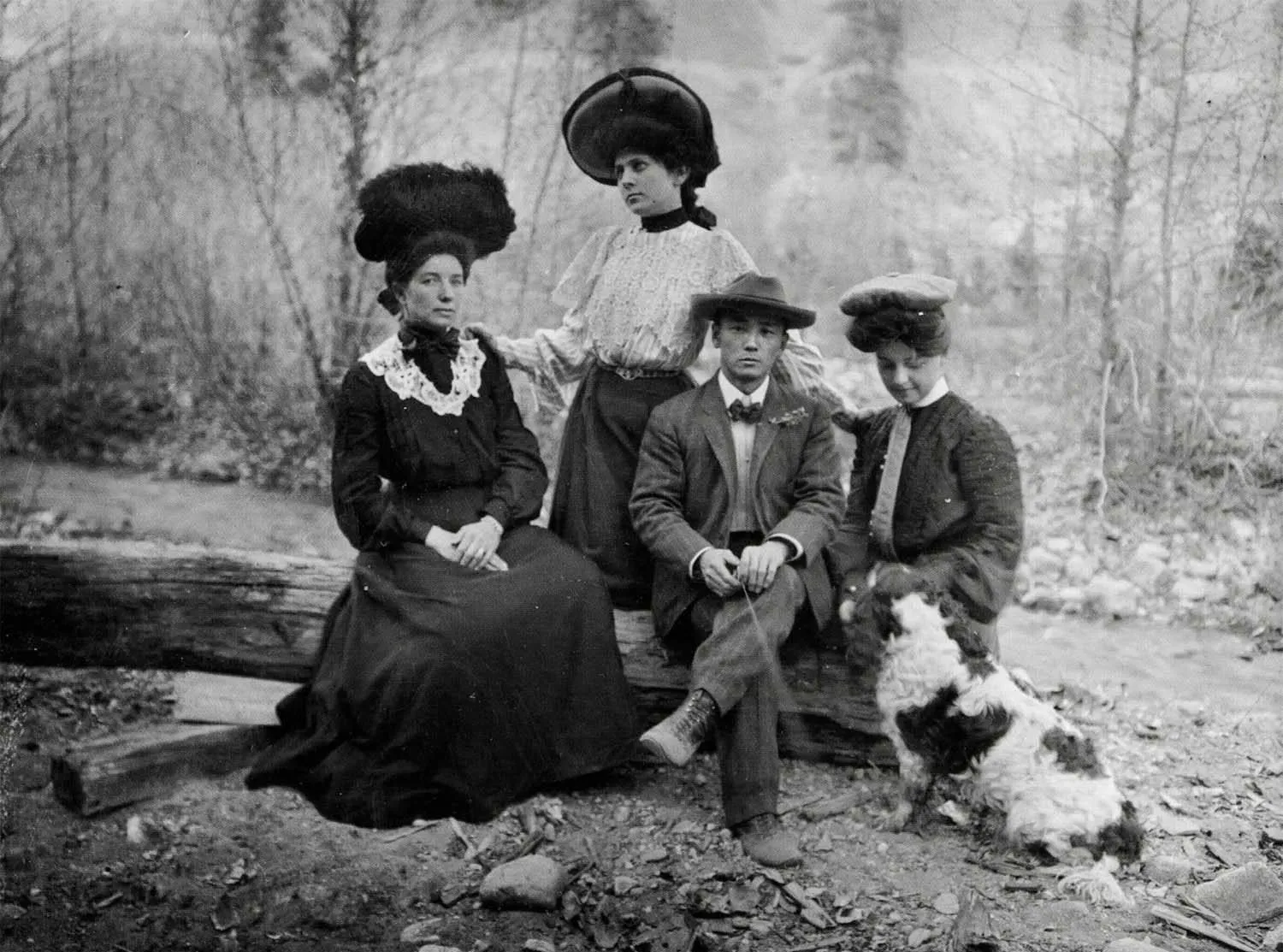
Sadly, Frank passed away at the young age of 39, likely from tuberculosis. But his prolific photographic career is remarkably well-preserved by various historical societies in Washington state.
For Harrington, Matsura’s true enduring legacy isn’t even in these well-preserved, beautiful photographs, as important a chronicle as they are. It’s in the universally high esteem he still enjoys to this day with the Native people he became such good friends with.
“Even today, people in that area still uphold his memory. He’s been dead for over a century! But they still remember him and revere him. That touched me deeply, it really moved me,” Harrington says.
“And it points out the reason why we care about history.”
Our Mr. Matsura screens this Friday, March 6, 5 pm at the Otis S. Johnson Cultural Arts Center downtown as part of the Hindsight Film Festival. Get tix here.