
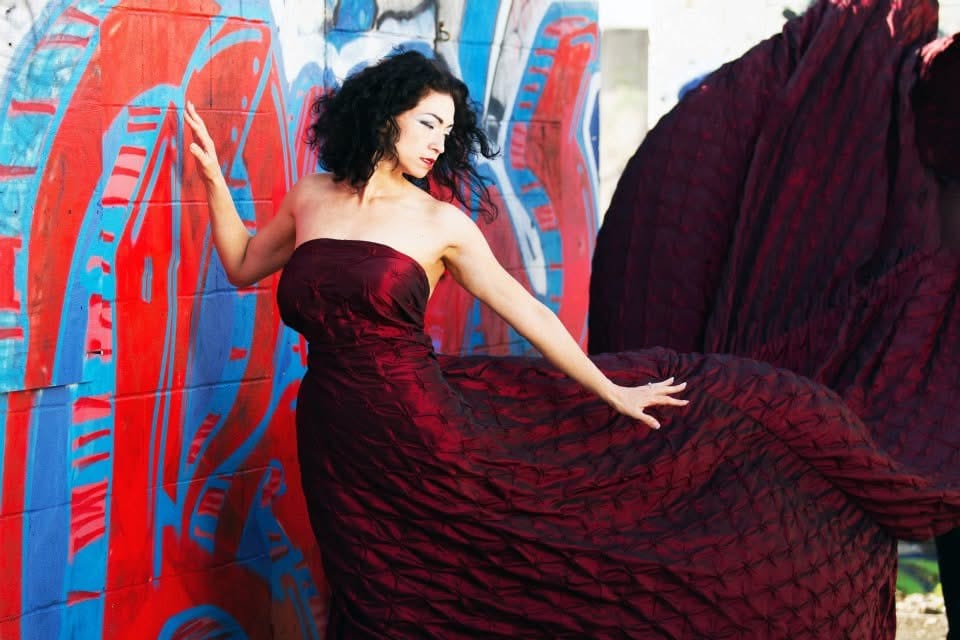
WE ALL could use some good news right about now.
And the great news is that one of the most beloved figures in Savannah’s performing arts community, JinHi Soucy Rand, is taking her show on the road.
Specifically, to the iconic Edinburgh Festival Fringe in Edinburgh, Scotland, this summer.
“I’ve been taken aback by all the enthusiasm and support,” says JinHi. “It’s a project I’ve been working on for quite a while – but the response has been much more than I expected.”
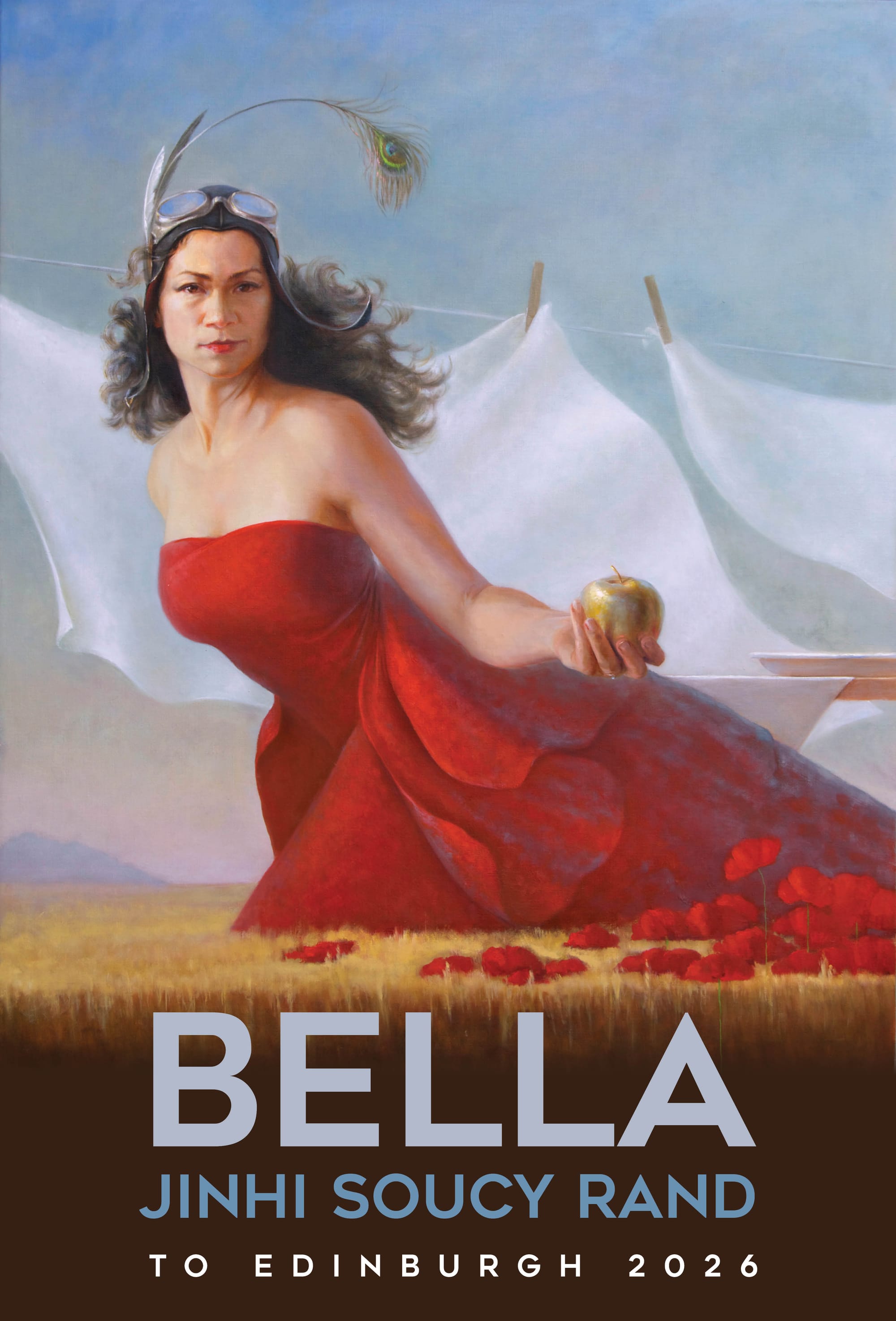
The one-woman show, titled Bella, will be performed at the Fringe in Edinburgh on August 17, with a special local preview show expected May 3 at the Savannah Theatre downtown.
“Bella is Italian for beauty. It’s a solo show. So the main challenge was to make it very theatrical. This is not a TED Talk,” she laughs. “Though I wouldn’t mind doing a TED Talk someday.”
Those of us who have known and admired JinHi throughout the years already know this won’t be anything like a TED Talk, or anything like your average one-woman show. Because JinHi is no average woman.
She is, quite simply, the most courageous person I’ve ever known. And I’d be far from alone in saying so.
From her earliest endeavors with the legendary City Lights Theatre in Savannah in the 1990s, through her groundbreaking direction at Muse Arts Warehouse, JinHi has been an inspiration for literally generations of Savannah performers and audiences.
“Very early on I was inspired to try and take the show to the Edinburgh Fringe. It is autobiographical – a lot of people know part of my story, but not THIS story,” she explains.
Specifically, Bella is the story of how JinHi’s love of theatre and performance has intersected with a list of physical setbacks which almost defy description, in their longevity, severity, and scope.
“It’s about a woman and the trials in her life since 1983, when this story began of her various medical obstacles – cancer, tumors, other things,” JinHi says.
“It’s about the challenges of being an actor and looking like me. It’s also very much about theatre and community and how those things shape your life and your relationships.”
Anyone who knows JinHi is aware that she is very transparent about her nearly life-long struggle with illness.
She rattles off the list:
“Bone cancer in my teens, resulting in the loss of a leg… brain tumors in my 20s… 8 years of epilepsy… infertility in my 30s… lung cancer in my 40s and 50s,” she says simply.
“The point of the play is these challenges make me who I am. They are not separate from me,” she says.
“At the same time, my illnesses are not the most interesting thing about me.”
The genesis of the play is, like JinHi’s story itself, unusual and remarkable.
“When I was 14 someone told me I should write a book. But it never interested me or fit with my skill set,” she remembers.
More recently, her theatrical career took a necessary downturn due to more pressing concerns.
“I knew I couldn’t direct any more shows because of my health. Someone said, write a play for yourself. I said, I can do that,” she recalls.
The timing of that epiphany, she says, was pivotal.
“It came at a time when I was worried I wasn’t contributing enough, or creating enough. That period began about two years ago when I hit another new low in my health,” she says.
“I was in bad shape. I had to get around in a wheelchair. At the time I was almost resigned that I would be in a wheelchair the rest of my life,” says JinHi, who has typically walked with crutches since she was a teenager.
“Last summer they lowered the dose of my chemo and I was able to do more. I thought, if I can breathe, I can create,” she says. “When you have Stage 4 cancer, you never know when’s the last really bad thing that will happen to you.”
JinHi says Bella was always “very much directed towards being a Fringe piece. At the Fringe Fest, the sweet spot for a play is about 45 minutes,” she says.
“So this show covers 43 years in 45 minutes. A lot of it has been a blur because of my illnesses. I'm not sure if it’s a dramatic comedy or a comedic drama,” she laughs.
The interesting – and in a way, challenging – thing about the Edinburgh Fringe is that it is not adjudicated. There are no formal barriers to entry.
“Basically, you have to find a venue that wants to put on your show for the Fest. Who you’re pitching to is the venue itself,” JinHi explains.
“I was very fortunate to have found Charles Pamment's theSpaceUK at Surgeon’s Hall. It’s right downtown, right in the middle of the festival area. It’s a beautiful space.”
JinHi is quick to say that despite Bella being a one-person show, she has a dedicated support team of leaders in local theatre, all of whom JinHi has worked with closely over the years.
Her husband, Mark Rand, is one of Savannah's premier graphic designers. And the team of course includes her also-very-well-known brother Christopher Soucy, who has made a profound impact on the local performing arts scene in his own right.
“I have my brother, who writes plays, to help guide me. I have friends who write music, design lights. They’re all a part of my team,” says JinHi.
The flip side of the Edinburgh Fringe's artistic openness is that you have to pay your own way.
“You have to pay your own transportation and venue costs. And years of cancer treatment – and being in the theatre – means I don’t have a lot of money saved up,” laughs JinHi.
The local preview at 3 p.m. May 3 at Savannah Theatre will be a special fundraiser to raise money to fund Bella in Scotland.
A GoFundMe is forthcoming.
JinHi knows it won’t be easy.
“I am counting on myself to be able to do this. It will be challenging. There are side effects from the chemo.”
On a personal note, my own theatrical association and friendship with JinHi going back several decades is relevant.
She and I were in a play together directed by Jim Holt at the final incarnation of his City Lights Theatre, on Broughton Street where Savannah Taphouse is now.
The play was The Woolgatherer, by William Mastrosimone, a story of a doomed young working-class love affair, in which JinHi played a salesgirl afflicted with hemophilia.
In what could be argued was a precursor to more adventurous casting decisions of a later time, we performed the play without any nod to or acknowledgement of JinHi’s physical handicap.
“That was the first lead I had. I was very young and idealistic,” she recalls.
Much more recently, she had a chance to actually speak to the playwright, Mastrosimone himself.
“I asked him if Rose could be a one-legged person, seeing as she’s written as a hemophiliac in the script. He said, ‘I never thought about that!’” JinHi remembers.
“I told him that I wondered if that would not be telling the truth. He said, ‘That’s up to you!’”
At that time, the concept of representation in casting was not a widespread concept, in theatre or anything else.
“I did not really have representation,” JinHi says.
“But I advocate by living. By being out there, in the way that I am. By being here.”