
TIME SAWYER
THU SEP 10 | 8 PM | NICKEL & OAK LOUNGE
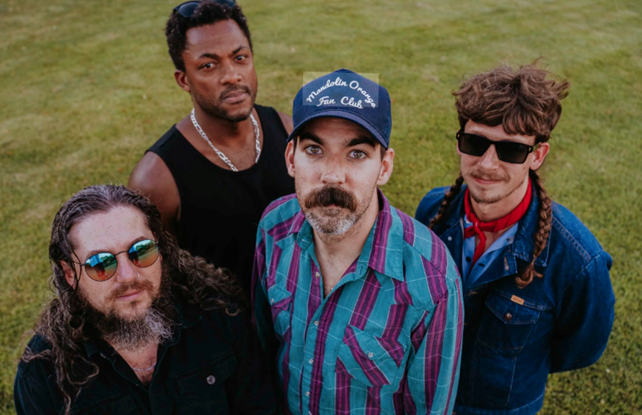
The new venue in town offers up a band whose under-the-radar status is a bit hard to figure. Co-founder Sam Tayloe (acoustic guitar) and longtime core member Houston Norris (banjo) used bluegrass instrumentation to produce rootsy folk rock in a way similar to the Avett Brothers. They released five albums in their first four years, a pace that was once somewhat normal back in the early ‘70s when Black Sabbath, Stevie Wonder, and David Bowie were doing it.
They can be compared to Uncle Tupelo without the harder electric edge, but are closer to The Jayhawks or Ryan Adams. Numerous appearances at MerleFest, FloydFest, and Bristol Rhythm & Roots Reunion only build the mystery. Maybe it’s too easy to blame the fickle, infantile music industry. Maybe it’s just a crowded field. The Supersuckers can probably relate.
Regardless, the early albums shine, but Time Sawyer’s 2017 breakthrough of sorts, Wildest Dreams, represents their most visible period. Produced by Mike Ashworth of Steep Canyon Rangers, it rounded out the sound by making the banjo just one of many sonic textures, introducing more prominent electric guitar, pedal steel, and rock-oriented songwriting. They stuck to that formula over the next three albums, but the full gamut is heard on Live at the Cock n Bull, released last year.
Overall, the sound is more soulful than most traditional country-adjacent music tends to be. Tayloe’s lead vocals are pleasant and soothing, if a tad nasal, but it fits the music well. It worked for Hank Sr. and B-Real.
THE WAY YOU MAKE ME FEEL: CELEBRATING THE MUSIC OF MICHAEL JACKSON
THU SEP 10 | 8 PM | DISTRICT LIVE
Between his time with the Jackson 5, as a solo artist, and in collaboration, Michael Jackson sang on a ridiculous 41 Billboard Top 10 singles, including 17 No. 1 songs. Although the Hot 100 chart had only been around for 12 years by 1970, no artist ever had their first four singles reach the top. Then I Want You Back, ABC, The Love You Save, and I’ll Be There did it, all in 1970.
Twenty years later, Mariah Carey beat the record with five straight No. 1 singles from 1990-91. By then, Jackson had already hit No. 1 with five singles in a row, all from the Thriller follow-up, Bad. And Thriller had seven Top 10 singles alone. The point is, he’s got dozens of songs almost everyone knows.
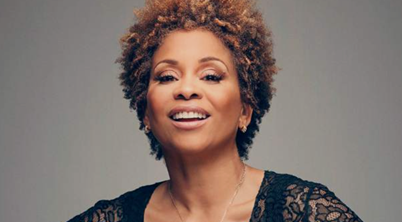
So who has the guts to sing such a barrage of culturally iconic pop songs? You may not know the name, but you’ve probably heard her. A lot.
Niki Haris began singing professionally in the early ‘80s, eventually working with stars like Whitney Houston, Anita Baker, and the Righteous Brothers. Her big break came when she auditioned for and earned a spot on Madonna’s 1987 Who’s That Girl tour. She went on to work with Madge for 14 years.
While there is no definitive proof, it may not be a coincidence that the years of collaboration were a time when Madonna’s voice went from the effective-but-limited Betty Boop style made famous on the singles Holiday and Like a Virgin to the more mature, controlled vocals heard between Like a Prayer and Ray of Light. Haris wasn’t just singing oohs and aahs; she was singing alongside Madonna during live shows and is credited on several albums.
Another twist is bandleader Christian Tamburr, whose musical direction adds a modern jazz vibe to the soul and R&B of the songs. An accomplished arranger in his own right, he’s worked with Julio Iglesias, Cirque du Soleil, and Dave Brubeck. His own bands have played the Kennedy Center, Lincoln Center, and the Newport Jazz Festival. With GA tickets starting at $25, this much talent covering this level of songwriting is an absurd bargain.
SPIKE HELLIS + NUXX + KOLA HAK
TUE SEP 8 | 8 PM | THE WORMHOLE
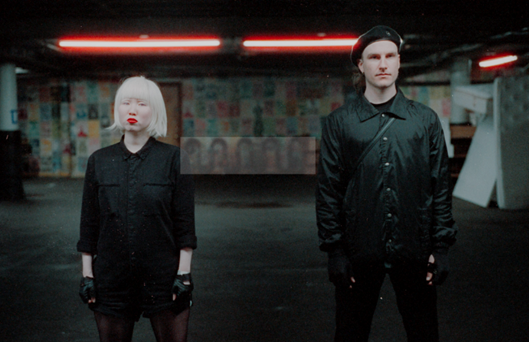
Neurosound Booking closes out their four-part summer Psychedelatronica series with a darker, goth-centered headliner. LA’s Spike Hellis was born on Halloween 2019 and has been trying to scare audiences into a dance-or-die proposition ever since.
Their brand of EBM, short for electronic body music, is a minimalist, industrial form of dance music that’s darker and less bouncy than EDM. Their self-titled debut plays like early Kraftwerk made on an 8-track home recording device. Their latest, Successor, is more percussive and noisier, like a revived KMFDM.
New York’s Nuxx also delves into EBM, with more builds and drops from traditional house music and techno than the LA unit. Visual artist Madeline Seely refers to her EBM as “electronic bitch music.” Some tracks veer into harsher digital hardcore, while a frantic punk energy pervades most of the material.
Local support for the two mega-cosmopolitan artists comes from Kola Hak, the experimental electronic project of scene veteran Derek Lynch. Among many bands, Lynch played in Crazy Bag Lady, Gretta O and the Toxic Shock, A Girl A Gun A Ghost, and was the bassist for The Discussion’s 2017 European tour.
He also plays bass for local metal kings Black Tusk and is by far the least threatening of the four members. Despite that voluminous record of amplified rock rage, his digital style is often downtempo, ambient, and atmospheric. It’s closer to the trip-hop side of EDM than the EBM of the others, but still fits the bill.
NEUTRAL SNAP
FRI SEP 11 | 9 PM | BARRELHOUSE SOUTH
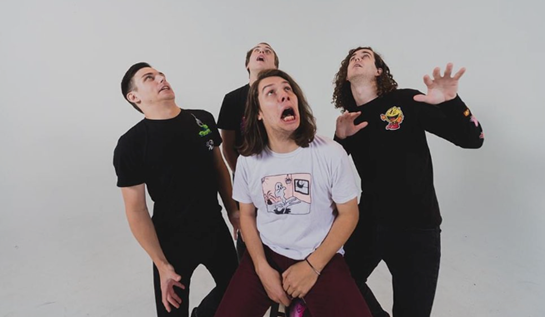
With several appearances on the old Playboy Magazine party school rankings and a No. 1 spot on the Princeton Review list in 2000, Louisiana State University has quite a reputation. If Savannah ranked its bars for debauchery, Barrelhouse South would surely be high up on the list. So what better venue for a pop-punk band that started as a party band at LSU?
Neutral Snap, which now calls New Orleans home, built a following playing covers of bands like Blink-182, Fall Out Boy, and Green Day in the mid-to-late 2010s. By the end of the decade, they began writing their own music. Their debut LP, Sorry, I Passed Out, dropped in 2020. The title’s droll humor and 10 songs in 30 minutes fit the mood of alternative rock radio at the turn of the millennium.
Unsurprisingly, the songs are in the same vein as the bands they covered. Strong melodies, competent harmonies, buzzy guitars, and big hooks dominate. Topics include relationship anxiety, relationship awkwardness, and relationship catastrophes. To be fair, they also get into relationship regrets and relationships missed and longed for, so no need to unfairly pigeonhole them.
Comparisons to the Descendents make sense, especially since Joshua Latham’s snotty vocal delivery is close to younger Milo Aukerman, but not at all like his current gritty heft. Nerf Herder’s Parry Gripp is another strong vocal reference point, and the overall band sound recalls Blink-182.
The underappreciated Lucky Boys Confusion is the strongest harmony match. Given the room and the Friday night crowd, it’ll only feel nostalgic if you’re there looking for your wayward kid.
FUTURE JOY
SAT SEP 12 | 7 PM | BROUGHTON STREET BOWL & BREW
Around 1990, a slew of awful glam and hair metal bands tried to escape the indignities of a dying, empty style by claiming “we’re just a rock and roll band.” The dishonor roll includes Motley Crue (no umlauts earned), Poison, Great White, and L.A. Guns. It was all bullshit, and they sucked just as much with or without smeared lipstick and neon zebra-print bandanas.
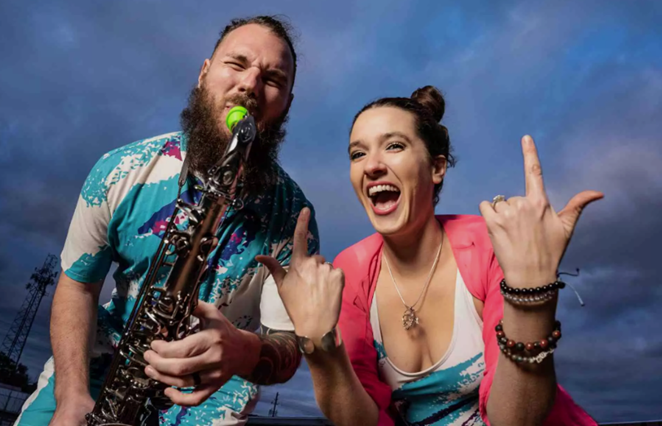
On the other hand, a band like Future Joy genuinely embraces the plethora of styles in their music. Under the broad but accurate description of “live electronic duo,” they go for and pull off EDM, bass music, soul, funk, drum and bass, jazz, house, and dubstep.
A digital spine runs through it all, but analog sounds appear at the right time, supplied live by Zach Simms and his trio of tenor, bass, and baritone saxophones. He and partner Emily Cooper both sing and play keys. Future Joy has spread the message at high-profile festivals like Bonnaroo, Electric Forest, Elements, and Hulaween.
These events draw crowds in the tens of thousands. Seeing them in a subterranean semi-bowling alley bar adds the weirdness electronic music seems to gravitate toward.
By Frank Ricci