
By Nicole Moore, Cobblestone Tours
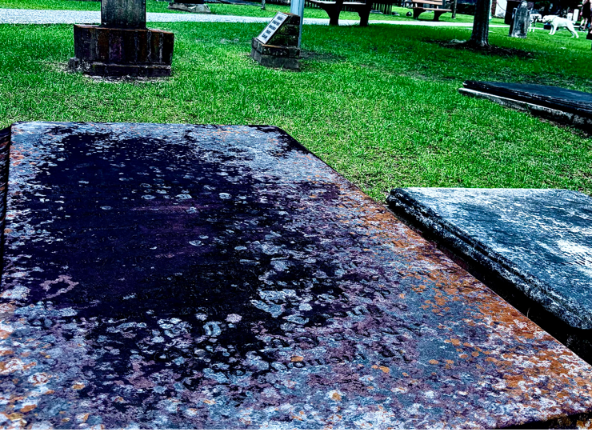
THE first grave on the right, as you enter Colonial Park Cemetery, is Anne Guerard. Her epitaph is worn and difficult to read, but thanks to the Colonial Dames of Georgia, who documented all of the epitaphs in the cemetery in 1924, it is recorded:
“Anne Guerard died in 1793, at the age of 41, a few days after giving birth to her 15th child.”
A haunting note is that of her 15 children, only 2 are listed in genealogical summaries, suggesting that 13 of her children died in infancy. In spite of this powerful reason to be compassionate to Mrs. Guerard, her epitaph goes on to sound bizarrely callous:
“How Lov'd , How Vaul'd Once Avails Thee Not,
To Whom Related, or By Whom Begot;
A Heap of Dust Alone Remains of Thee
Tis All Thou Art, And All The Proud Shall Be.
The dead how sacred! Sacred is the dust
of this heav'n-labour'd form erect, divine
this heav'n assur'd, majestic robe of earth
He deign'd to wear, who hung the vast expanse
with azure bright, and cloth'd the sun in gold.”
So….you’re not so fancy, now that you’re dust?
Unexpected legacy
Anne Guerard is one of the three Annes associated with a famous ghost story in the historic district. She is the mother of the real Ann from the 17Hundred90 Inn.
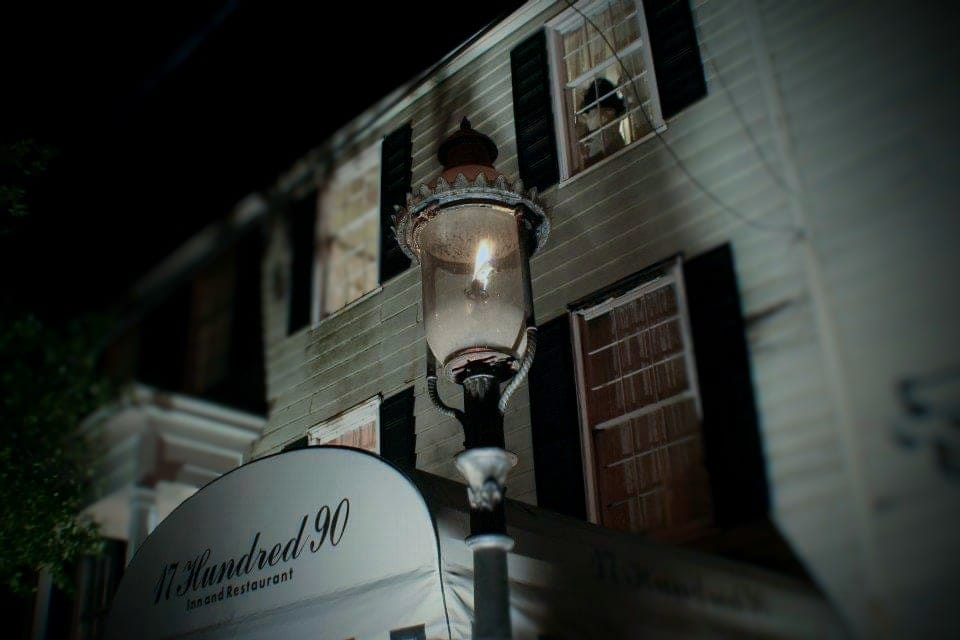
If you have ever taken a ghost tour in Savannah, you have probably heard the story of Anna and seen her creepy silhouette lurking in the window above the main entrance of the 17Hundrend90 Inn and Restaurant. The Anna that we know from the stories evolved from Ann Matthewes White, who was married to Steele White, who built the building. A popular version of their story makes Steel White out to be the murderer of his wife, but the archives show us that he was thrown from a horse when he was 38 years old. His neck was broken in the fall, and Ann outlived him by nearly 40 years.
He may have been a wonderful husband, as well. In a letter to his wife he says: “My Darling Wife, time hangs heavy on us both,”
If only he could have known how true that was.
It is Ann’s mother, Anne Guerard, who has sparked our interest lately. It is hard to imagine having 15 children, especially in an era where women were encouraged to stay out of sight when in such an unseemly condition as pregnancy. Women were expected to withdraw from socializing, and would practice “lying-in” for weeks after giving birth. On our tours, the gallows humor response is how a person is likely to suffer “melancholy,” or even “hysteria,” after so many of such experiences. These ladies spent years being isolated broodmares, surrounded by little ones, and confined to the home. Maybe the option of spending a few weeks at an asylum might have been preferable.
Enter the Asylum
Asylums, of course, have earned themselves a terrifying reputation, and deservedly so. There are hundreds of letters from victims of shocking and unfathomable abuse, many who were institutionlized simply to control them, completely under false pretences with no real evidence of mental illness. Being restrained, caged, and tortured with ice baths, beatings, and cruel surgical practices wasn’t unusual. If their written pleas to their families for help weren’t destroyed, they were held by the asylums’ administration and never mailed. With no one to defend these patients, countless victims died from abuse and their stories will never be told.
On the other hand, some asylums provided a standard of living and healthy food that was not available to some patients out in the world, and there are accounts of people readmitting themselves after a few years of being released. As outrageous as our joke about preferring an asylum sounds, in some cases it could be right on the mark. Not all asylums were nightmarish. Some were run by genuinely caring physicians, but don’t get mentioned or sensationalized.
The 1700s
There actually were no asylums in the colonies during Anne Guerard’s lifetime. People of means would be cared for by their families. If an average person was mentally ill and not causing problems in society, they might be left to their own devices in the countryside. Causing a disturbance or posing a threat, however, could land a person in jail. We can observe a similar system today.
In 1773, the first mental hospital in the colonies was opened in Williamsburg, Virginia, and the name had a nice ring to it: the Public Hospital for Persons of Insane and Disordered Minds. Since it was believed that mental illness was a punishment from God for some kind of an unforgivable transgression, there was a strong negative stigma attached to being associated with a mental institution.
Before the hospital opened, at-home treatments were the only options. Melancholy or hysteria were the diagnoses for women with depression, anxiety, or emotional outbursts. To purge the body of “corrupt humors,” bloodletting, with or without leaches, was the standard remedy. This could be combined with the use of laxatives and emetics (induces vomiting).
Another way to remove toxicity from the body was “blistering,” for which Blister Beetles would be ground up and applied to the skin, and the resulting blister would be continuously broken open to drain.

Should a woman be overcome with a sudden hysterical outburst, smelling salts and ammonia were handy, and strong herbs and perfumes would be placed against the pelvis to encourage the body out of its distress. One should also be mindful of the “wandering womb,” where an angry, unsatisfied womb would travel the body and block passages. (Okay, that comes from ancient Greece, but I couldn’t resist.) While the Wandering Womb theory did not persist, one of the preferred treatments did. It seemed that some ladies just needed a good roll in the hay. A good dose of D, and maybe a little opium, and balance would be restored. If a woman was not married, a doctor or midwife could massage her personal area with special ointments.
Around here, this golden age of treatment changed in 1842, with the opening of the Georgia State Lunatic, Idiot, and Epileptic Asylum in Milledgeville. This Georgia hospital, later called the Central State Hospital, would go on to earn the dubious distinction of being the THE LARGEST MENTAL HOSPITAL IN THE WORLD. Oh yes, Georgia boasts abundant resources. And lunatics? Indeed.
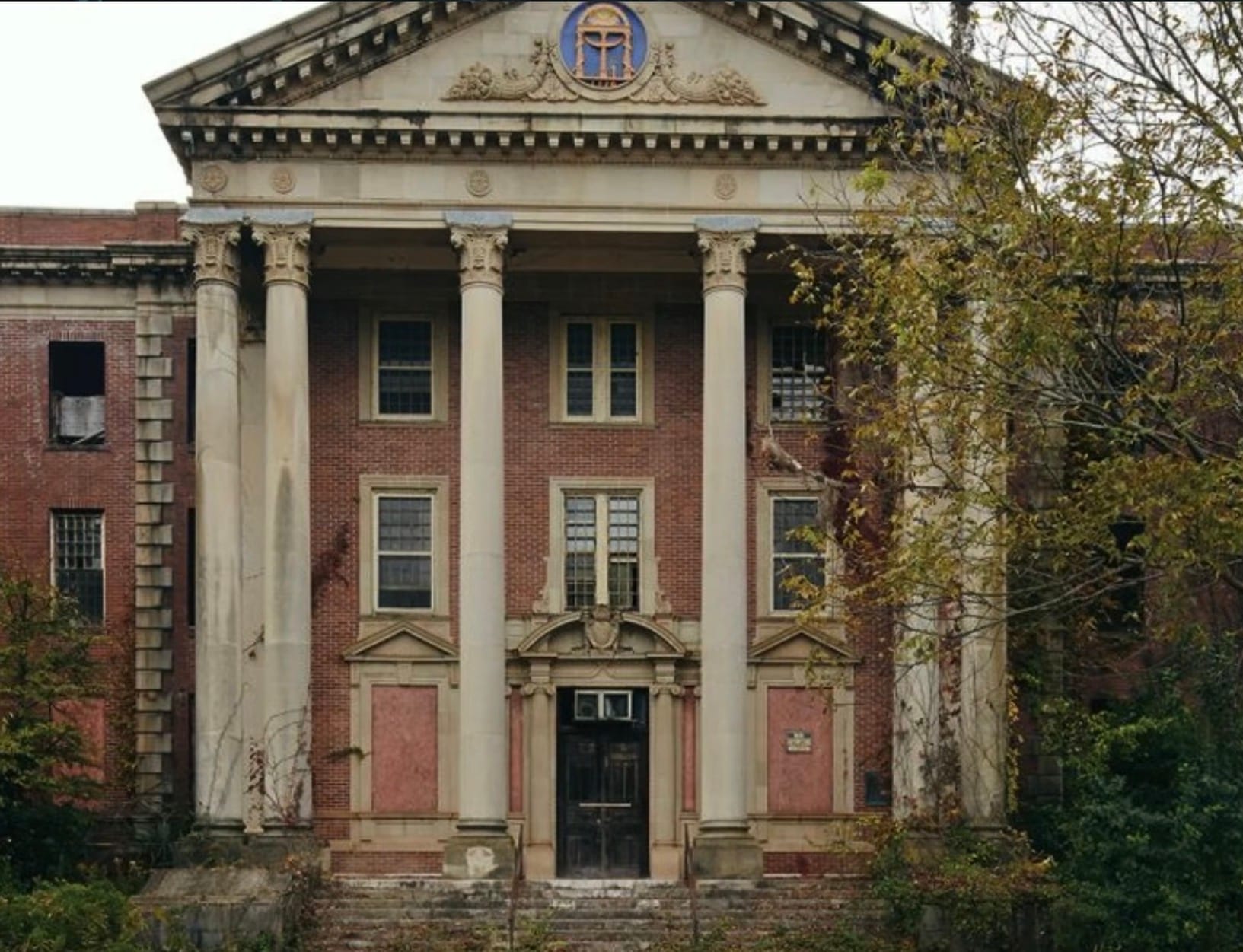
Some locals will tell you that as children they were threatened with being sent to Milledgeville for acting up, and this was a terrifying idea. Over the decades, practices included lobotomies, insulin shock therapy, and the ever-popular electroconvulsive shock therapy. At one time the Central State Hospital spanned some 2,000 acres and held over 12,000 patients. In 2010, the Department of Justice shut it down. Overcrowding, understaffing, and the “warehousing” of mental patients all contributed to the court rulings. An estimated 35,000 deceased patients are buried on the grounds, many of whom were unclaimed. From a paranormal perspective, questions about the residual energy of so much suffering arise.
Today, the Central State Hospital in Milledgeville has only one small department, for the criminally insane. But as we speak, plans for transforming the original buildings into a hotel and housing are in the works.
Cue the horror movie music.