By Nicole Moore
WE HAVE a “who dunnit” on our hands at the Old Burying Ground, or as it is more recently known, Colonial Park Cemetery.
This has been on my radar since a local tour company owner first challenged me on the sidewalk outside of the cemetery around 8 years ago. A duel, you say?
The challenge: who was it that vandalized at least 21 burial markers in Georgia’s oldest existing cemetery?
Most locals will say that mystery has been solved; it was Union and British soldiers during their occupations of Savannah. But lately that long-held understanding has been decried in public spaces.
Is the belief truly erroneous? Or are some self-proclaimed public historians of local tour companies engaging in what I call “Gotcha History,” where the main objective is to one-up others with an opposing viewpoint?
To unravel this mystery, a good place to start is to look into the idea that occupying soldiers are responsible for the vandalism.
Going back to the Revolutionary War, and the occupation of Savannah by the British from 1778 to 1782, damage to the cemetery has been confirmed by the fairly recent project from 2011.
Savannah Under Fire, 1779: Identifying Savannah’s Revolutionary War Battlefield, was an archeological study during which a British defensive ditch was discovered in the cemetery. This is a solid confirmation of handed-down accounts of British soldiers using the cemetery for military purposes.
In 1783, citizens complained about the destruction of the cemetery’s wall by British soldiers, and that corpses were being dug up by animals. “Theatrical events” were held as fundraisers to restore the damaged wall.
The British would have had plenty of time to carve new dates and add numbers to the grave markers, so score one for the logical conclusions by Savannah natives.
As for the occupation by General Sherman’s Union forces 82 years later, there are numerous documents stating that the Union Army damaged the cemetery. The Trustee’s Garden Club, which undertook a restoration of the cemetery from 1967-1970, published a pamphlet that can be found in the archives of the Georgia Historical Society off Forsyth Park.
It states that General Sherman’s men used the burial vaults for shelter and amused themselves by changing the dates and ages. The classic book, The Old Burying Ground: Colonial Park Cemetery, by Elizabeth Piechocinski, describes vandalism specifically by Union soldiers 6 times throughout the book, which also includes 7 pages of references from sources ranging from government institutions to private family collections.
One such collection from the 1950’s can be easily accessed in a folder in the archives, with a list of mis-marked tombstones attributed to occupation by soldiers, including Susannah Gray, age 121 years. She was actually 21 when she passed, of course (by being struck by lightning).
Another piece of the puzzle is that the year of that occupation, 1864, was the coldest winter on record. With more than 60,000 troops needing shelter in the Savannah area, it's a safe bet that a little brick room, filled with dead folks or not, was a welcome “port in the storm,” if you will.
Piechocinski mentions accounts of soldiers rigging stovepipes in the vaults to vent the fires they used to survive the cold. Less excusable accounts refer to the soldiers actually pulling bodies out of the graves and relieving them of their valuables. Shameful, and documented.
With these references in mind, and with the knowledge that, of the vast amount of troops in the area, most of them were 12- to 18-year-old boys who waited around for a month before departing, and for several years, Union soldiers, initially around 5,000, had a presence in Savannah - well, doesn’t a little critical thinking tell us that Savannahians have been correct?
All of this is not to say that vandalism hasn’t occurred in Colonial Park Cemetery over the years by hoodlums other than occupying military forces. Desecrating burials has long been reported in and around Savannah.
It seemed to be widespread in the 1940s, prompting the erection of the wrought iron fence in 1956 that still protects the site today. The 1980s saw another surge in vandalism.
So is it reasonable to place blame on local kids who used to have unfettered access to Savannah’s dearly departed? It is.
Imagine being a boy with an adventurous heart and a slingshot. You’ve told your mother you are hunting birds, and you are, but there are burial vaults that are like little underground ruins, with open doorways and shadowy darkness testing your courage.
You know better, but…maybe for a moment you are an explorer on a dangerous expedition. Or maybe you’re just rebellious and in possession of a pocket knife.
A thought on the boys with pocket knives theory: it does take quite a bit of time and effort to carve into a granite tombstone, and they are out in the open. Not all of them were carved, either.
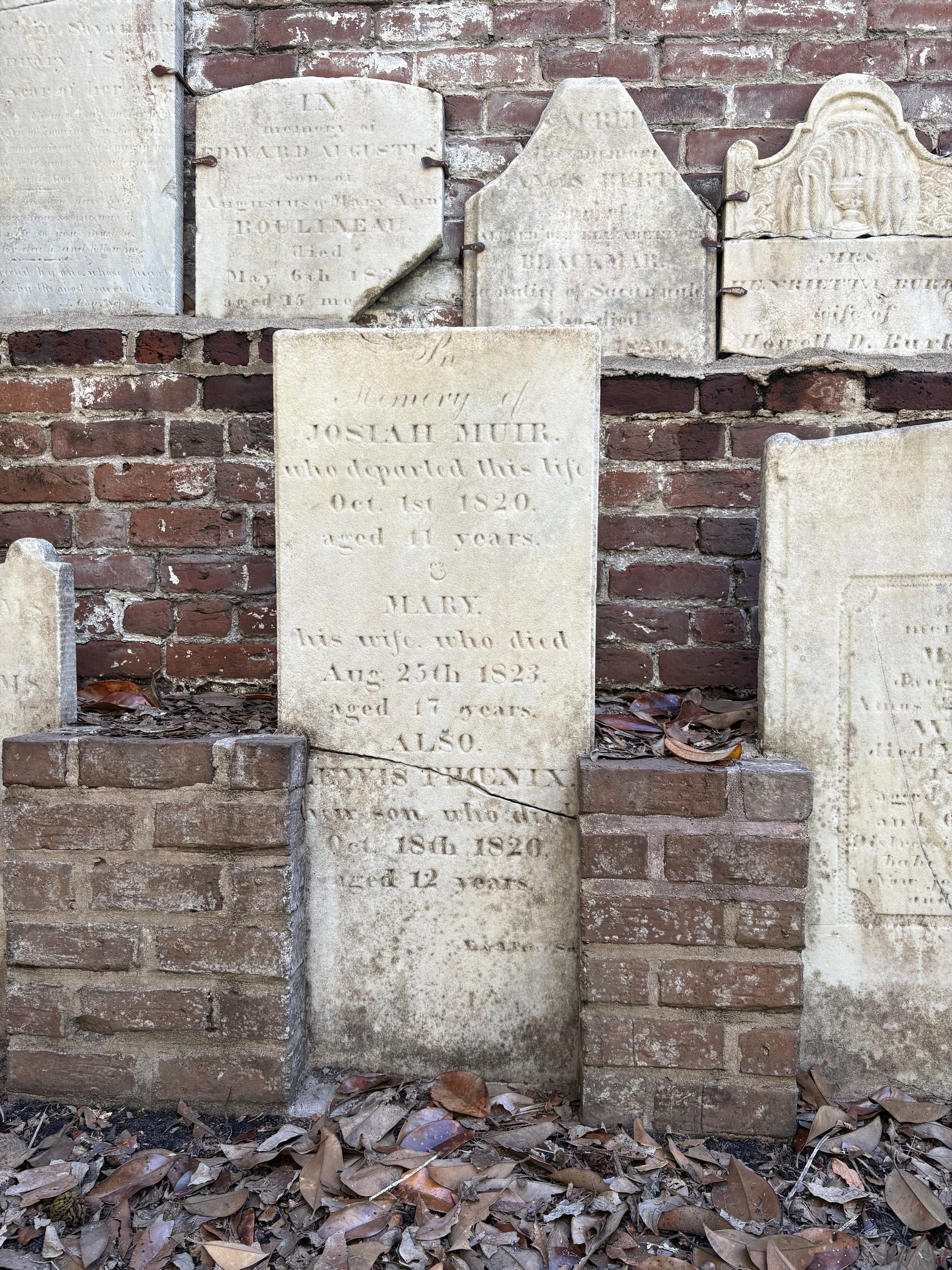
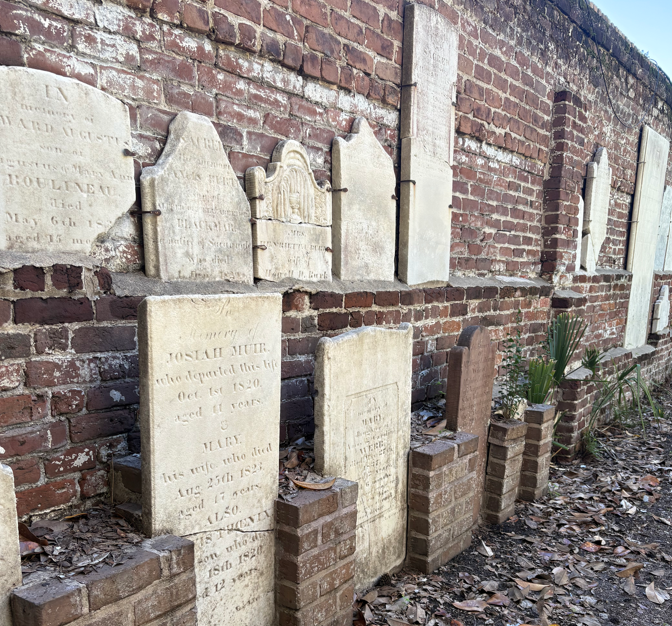
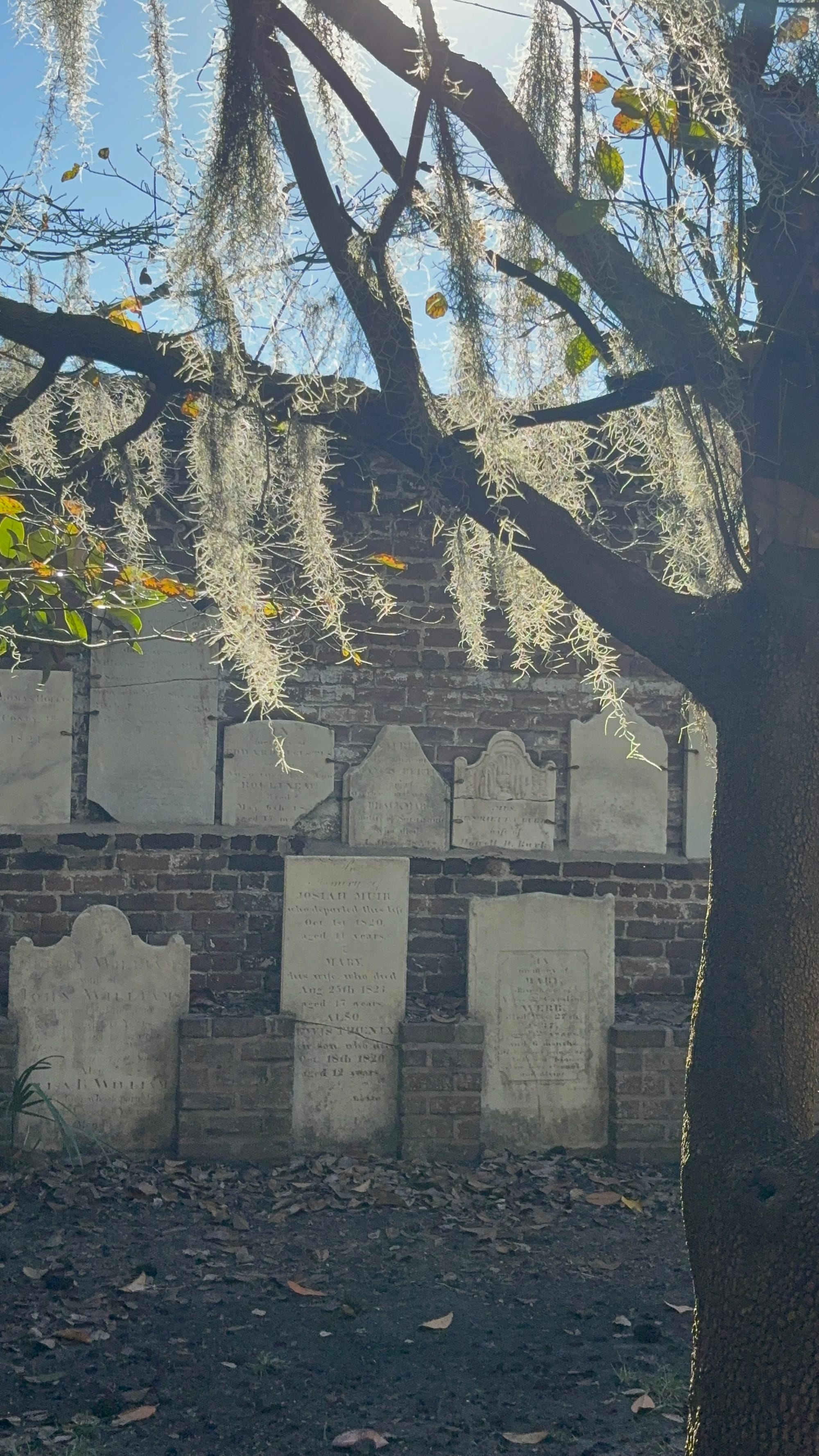
In the case of Josiah Muir, something was added to the number 4s in the ages of the parents, making them appear to be the number 1. These considerations make the soldier theory more likely.
So if the hill you want to die on is that the cemetery was never vandalized by the Northern Aggressors, then go ahead.
But it is my conclusion that the answer to the challenge is that the disrespect of the memorials in Savannah’s historic burying ground came from far away and close to home.
And for a native Savannahian whose ancestors endured so much, the thought of military aggressors is a better story and easier to digest. Who can really fault that sentiment?
Your move. Would you like another shot?